
By Ali Wilkinson, Tiffany Hill, and Audrey Sauble
Your little rock lovers will marvel at the shiny quartz, agate, obsidian and more you can collect at local parks and view in museums and shops.
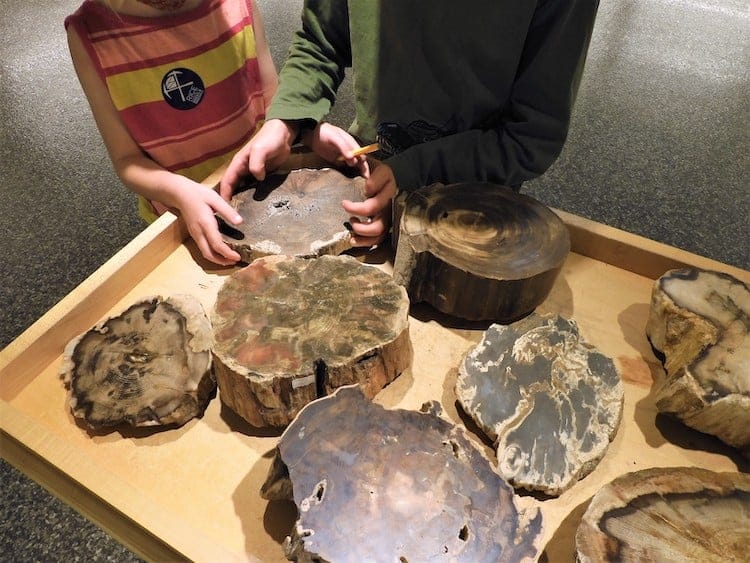
We get used to a lot of awesome things in Portland: plentiful parks, unique breweries, tasty food for every intolerance. But here’s one thing you just might take for granite (ba-dum-dum) — the amazing geological landscape surrounding us. In other words, there are cool rocks in abundance — and I mean like petrified wood and fossils cool — and maybe even in your own backyard. -AW
Mary S. Young Park
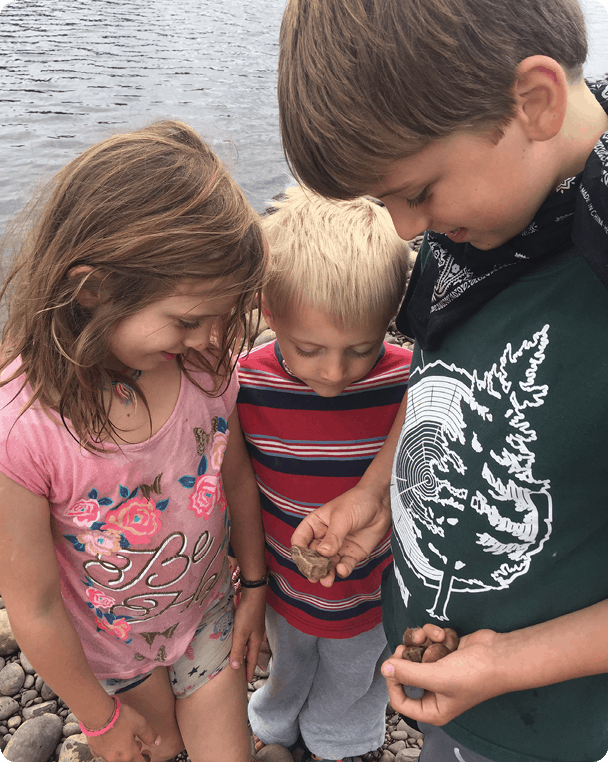
My three kids and I went a little farther than our own backyard for our rock hunting, or its technical term, “rockhounding” — or what my youngest, Teddy (age 5), refused to call anything other than “rock pounding.” But not much farther. Just 20 minutes from downtown Portland, West Linn’s Mary S. Young Park is an excellent destination for rock lovers, nature lovers and even bald-eagle lovers — we saw two eagles flying and calling to each other while we were there.
Although you can spend the greater part of the day exploring the woods and checking out the multiple beaver dams, we were on a mission. To make the most of your rockhounding, park in the larger of the two parking lots at the end of the drive (not the first one you see when entering), then take the paved path all the way down a steep hill. When the path comes to a T, turn right. Within a few hundred yards, you’ll reach the river.
At first glance, the rocks and pebbles underfoot don’t seem unusual. But take a closer look, and you’ll find a rockhound’s paradise. In the hour or two we were there, we found chunks of petrified wood, quartz, agate and jasper (a lovely brick-red rock). Another bonus with this spot is that the rocks have largely been rubbed smooth, making them great worry stones to keep in your pocket. The best find of the day was a piece of petrified wood that totally looked like wood, bark and all, about the size of the palm of Teddy’s hand. – AW

George Rogers Park
Next up, and just a few minutes away, we headed to Lake Oswego’s George Rogers Park. This is one of our family’s favorite spots for river swimming, but it is also a worthy destination on its own for the huge black chunks of human made obsidian lining the beachfront. In addition to the black, we found a few — much smaller — pieces of purple, green and even blue obsidian. – AW
Rockaway Beach
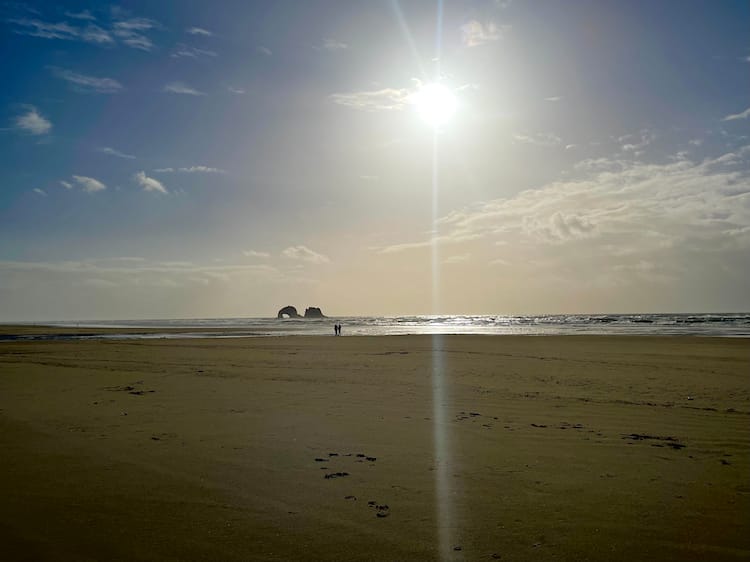
The whole of the Oregon Coast is prime real estate for rockhounding and beach combing. But for families looking to stick closer to Portland, Rockaway Beach is a great place to find beach-tumbled agates and jasper. The long stretch of beach makes for fun treasure hunting, and a great way to tire everyone out. -TH
Basalt Columns in the Columbia Gorge
You may have seen photos of the distinctive hexagonal columns in the Giant’s Causeway in Ireland—the Columbia Gorge and eastern Oregon have equally incredible basalt cliffs. The 2.4-mile WahClella Falls Trail near Bonneville Dam is one great place to find basalt columns and spot changes in the cliff layers. – AS
Rice Museum of Rocks & Minerals
You can’t take these rocks home with you, but Rice Museum of Rocks & Minerals is the place to go to if you’re a rockhound. Located in Hillsboro, the museum boasts a world-class collection of not only rocks and minerals, but also gemstones, fossils, meteorites and lapidary art. They also offer Mystery Mineral Days to help novice rockhounds identify unknown finds. Even better: Children ages 5 and under are free and youth admission is only $8. – TH
OMSI
The OMSI mineral collection is much smaller than the Rice Museum’s galleries, but it features a display with fluorescent minerals, information about rock identification (including hardness and luster), and a moon rock. OMSI hosts an annual Agate & Mineral Show every year, and —when it’s open — OMSI’s Paleontology Lab also has a fascinating fossil collection. -AS

Livingstone Rocks
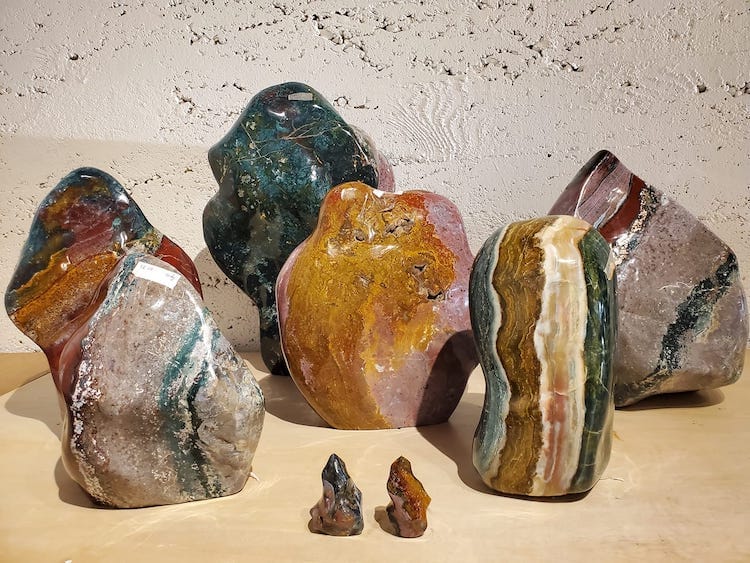
This East Portland gem shop opened in 2018, after owner Lori Livingston’s personal collection grew too big. Today, Livingstone Rocks has rocks, minerals, gemstones and more in an easy-to-explore layout. – TH
Join a Local Rock Club
We joined the Clackamette Mineral and Gem Club earlier this year, and my kids love the junior member’s show-and-tell time. Their junior club and regular club each meet once per month, although the club frequently hosts other (in person) events like field trips and rock sales. Besides the show-and-tell time, the junior meetings usually include a video or presentation on geology topics. Recently, we learned about NASA using Oregon’s geology to train astronauts for the moon landing, as well as how to grind rocks into pigments for painting. Portland has multiple rocks clubs in the area—use this guide from the Rice Museum to find the one that works best for you. The cost is around $20 per family for a year-long membership at most clubs. – AS
Screen-free Fun
We ended up with a decent stash of treasures from our day’s hunt. I loved spending the day outside exploring together, and the excitement of a really special find. It was also fun to learn together about what the different rocks were and how they were made — and also, apparently, that obsidian can give prophesying powers. The internet said so, so it must be true. I’d say I’m less excited about a few bags of rocks lying around the house, which, I prophesy, will end up scattered around the house and stepped on by tender feet. (Hey, the obsidian’s working already!) I’m hoping these will gradually make their way outside to brighten our fairy garden. But for now, the kids are content extending the fun by trading their (semi-)precious bounty. -AW